 Crescenda
Turn adversity into learning.
In the moment, a hard time is just a hard time. What it taught you only shows up later. Crescenda records what happened and brings you back to it in 30 days and in 6 months — when you can finally see what changed.
We're finishing the app. It arrives first for iOS and Android.
How it works
Three moments, and the app handles the gap.
-
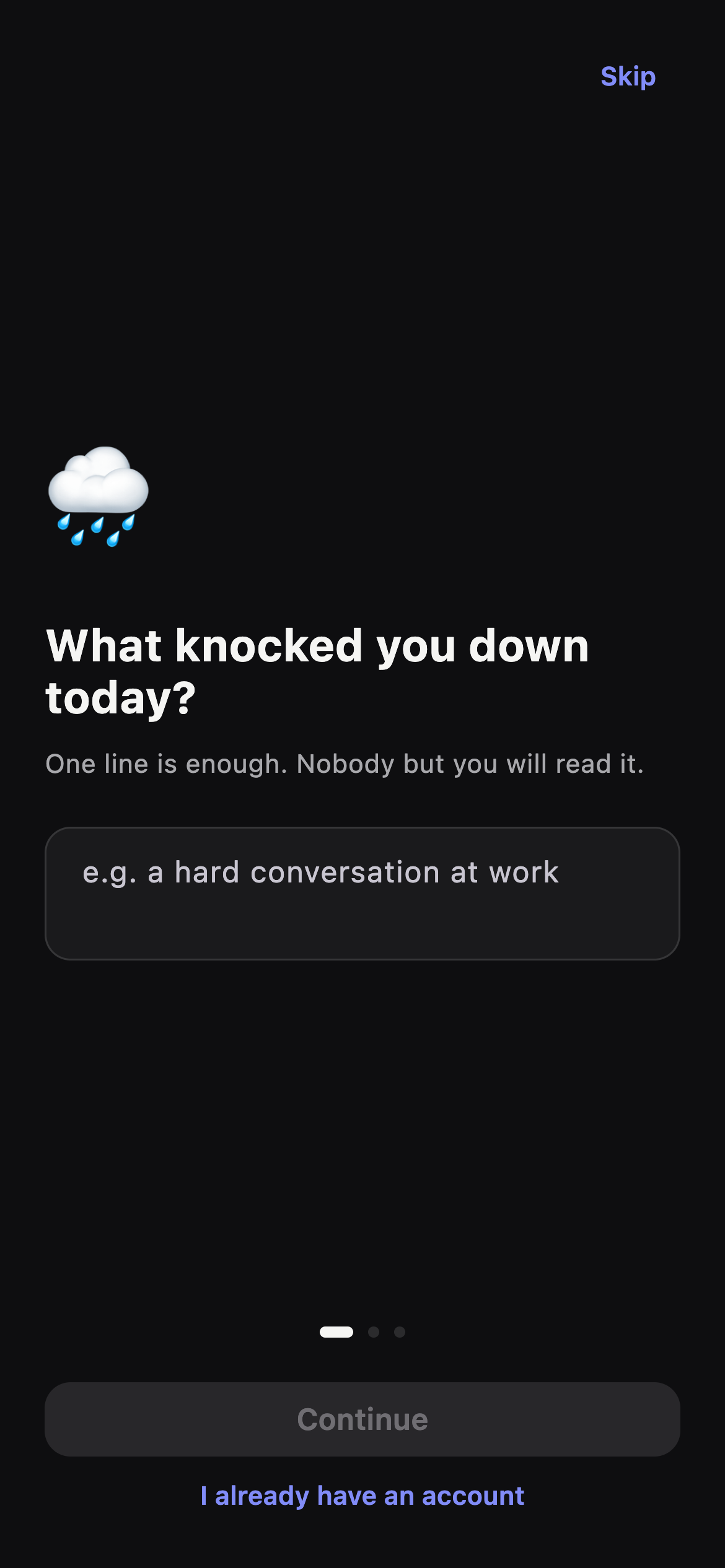
Write down the adversity
What happened, the context, and how you were feeling. It takes a minute and it doesn't have to be polished — nobody but you will read it.
-
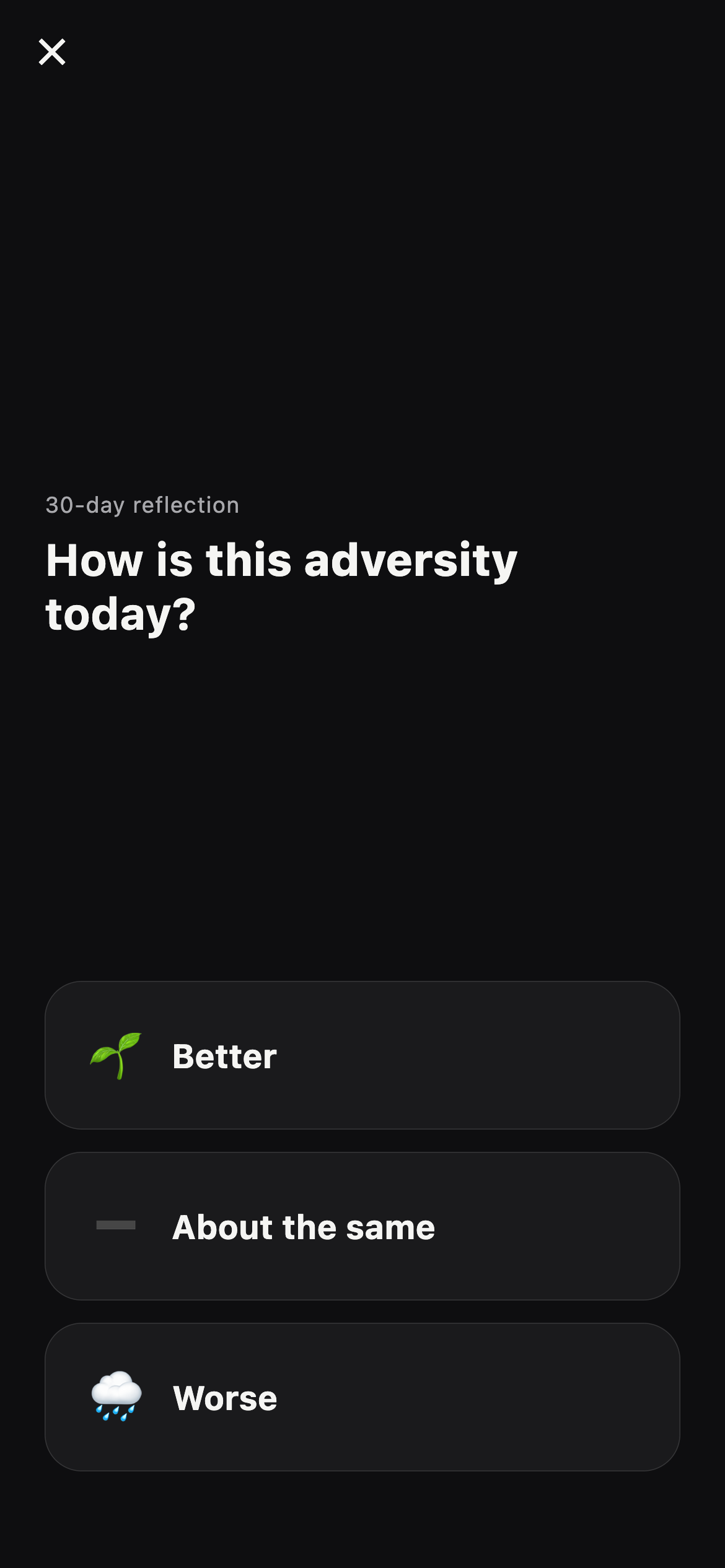
Come back in 30 days
The app reminds you. The dust has settled: what you learned, what pattern you recognise, and what you'd do differently.
-
Come back in 6 months
The question changes: what good came out of it, and what you actually changed. This is where adversity becomes experience.
Why it works this way
You can't describe the storm while you're inside it.
On the day it hurts, the hurt takes up everything. That isn't a lack of effort or maturity — you're simply still inside it. What an adversity meant almost never shows up while it's happening; it shows up when you look back. Crescenda exists to make sure there is a "looking back" with a record, not just a memory.
-
On the day: writing isn't understanding
You write it down precisely because you won't remember it properly. Over time memory softens what hurt, scrambles the order and fixes the ending. A record made in the moment keeps what you actually felt — including the parts you'd be embarrassed to admit today. It isn't for you now. It's for you later.
-
At 30 days: close enough, far enough
The intensity has dropped — you can reread it without reliving it. And it's still fresh: you remember the details, the names, what went through your head. That's the window where asking what you learned gets an honest answer instead of a rehearsed one.
-
At 6 months: the question changes
By now what happened matters less than what it turned into. What looked like an ending was often the start of something else — a decision you only made because you were pushed, a person who only came in because another left. That reading doesn't exist at 30 days. It needs the time.
-
Every day: satisfaction is a division
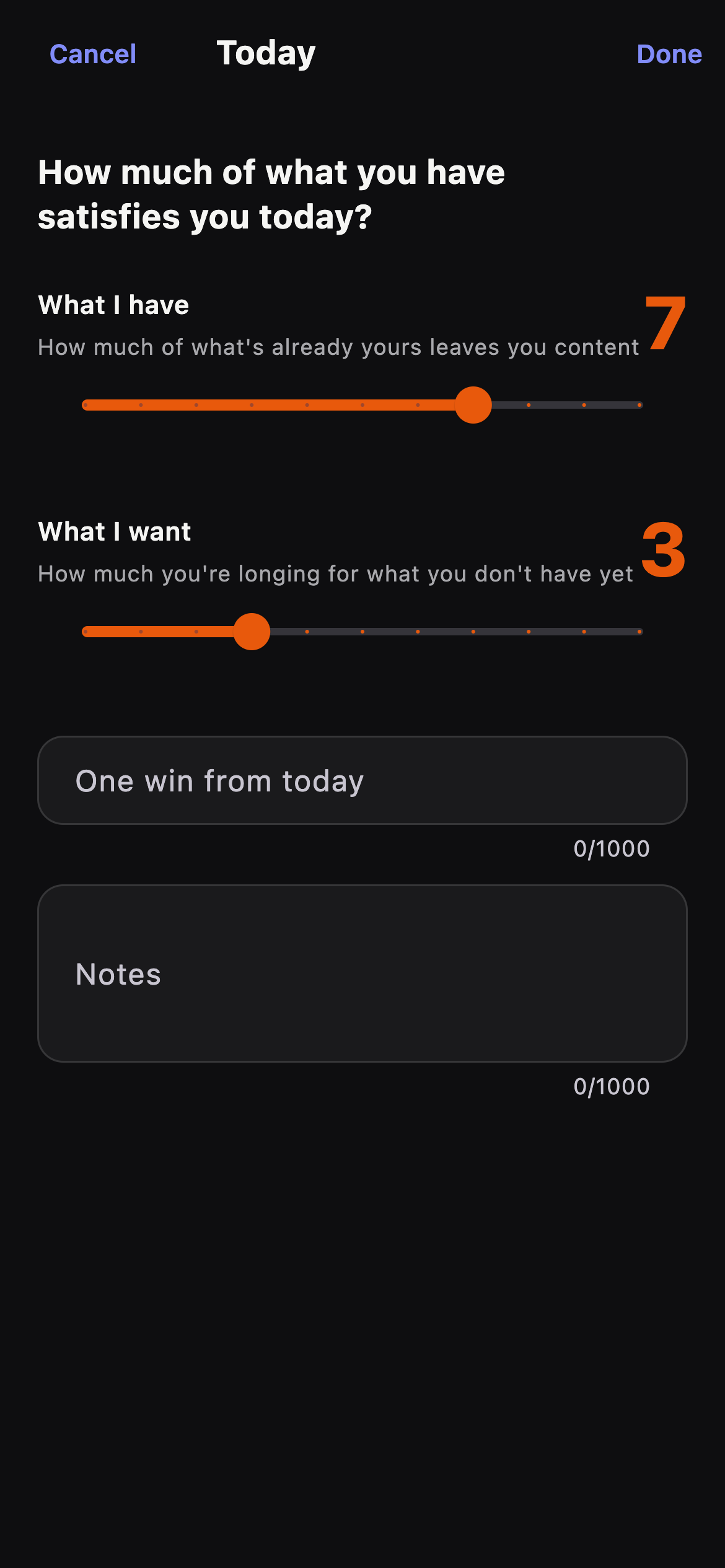
Satisfaction isn't what you have — it's what you have divided by what you want. You can spend a lifetime raising the top number and never move. The daily entry asks about both sides, and it's seeing them next to each other over a few months that stings — and teaches — more than either one alone.
One honest caveat: this isn't therapy and doesn't replace professional care. The 30-day and 6-month intervals are a product decision of ours — they don't come from any study. What the app does is simple and concrete: keep what you wrote and hand it back when it says the most. The idea of measuring satisfaction as a ratio between what you have and what you want isn't ours: it comes from Arthur Brooks's work on happiness. The insight is his; what we did was turn it into two questions a day.
In the app
Enough to keep the habit, and nothing more.
Reminders when they matter
You don't have to remember to come back. A push notification and an email when each reflection is due.
Encrypted on the server
Title, description and the body of your reflections are encrypted field by field before they reach the database.
Opens without a connection
Your entries are kept on the device, so you can reread them on a plane or underground. Anything you edit syncs on its own once you're back online.
Your progress, visible
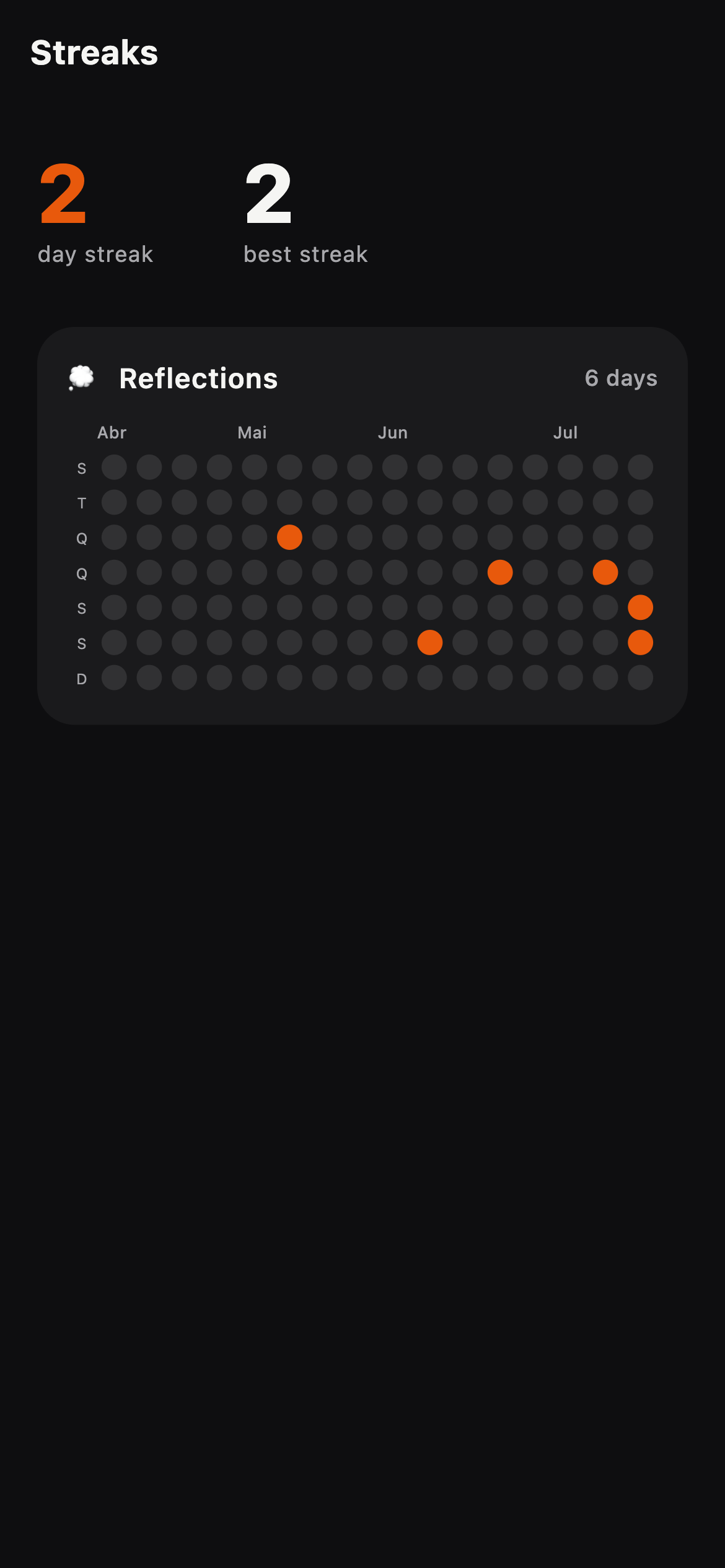
A heatmap shows the days you reflected. No targets, no nagging — just the shape of your year.
Guided reflection
Separate fields for lessons, patterns, gratitude and what you changed — instead of one empty text box.
Satisfaction, daily
Two questions a day: how much of what you already have is enough, and how much you're wanting what hasn't arrived. The gap between the two is the number that matters.
Pricing
Start free. Subscribe if it earns it.
The full cycle — the entry, the 30-day and 6-month reflections, reminders and encryption — is in both plans. The paid one only lifts the quantity limits.
Free
R$ 0
- Up to 3 adversities
- Full 30-day and 6-month cycle
- Push and email reminders
- 3 daily check-ins per month
Premium
R$ 9.90 / month
- Unlimited adversities
- Unlimited daily check-ins
- Everything in the free plan
Privacy
What you write is the sensitive part.
A journal of adversities holds the hardest things in your life. How that is handled is not an implementation detail.
- Field-level encryption Title, description, context and the text of your reflections are encrypted before they are stored — they are not readable in the database.
- Every account sees only its own Every query is filtered by your user, without exception.
- Reminders don't leak content The notification says a reflection is due. What you wrote never reaches the lock screen.